

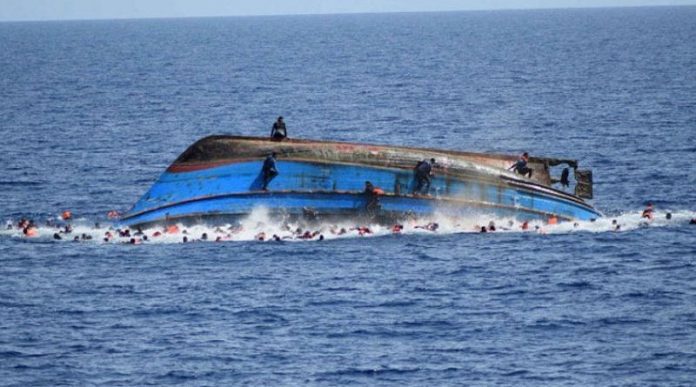
Muktodesh: Four Bangladeshi nationals have died after two boats carrying around 100 migrants sank off the Al-Khums coast in northwestern Libya. The Libyan Red Crescent confirmed the incident on Saturday, two days after the vessels overturned on Thursday night.
The organization said that rescue workers rushed to the scene after receiving reports of the two capsized boats near the Al-Khums coast. The first boat had 26 Bangladeshis, of whom four bodies have been recovered. Their identities have not yet been confirmed. The second boat was carrying 69 people—two Egyptians and 67 Sudanese nationals, including eight children. The Red Crescent reported that emergency rescue and recovery teams are working to rescue survivors, retrieve the bodies of the deceased, and provide necessary assistance. The coastal region near Tripoli has long been a major route for irregular migrants heading toward Europe. Accidents are common during attempts to cross the Mediterranean, and European countries have repeatedly expressed concern about the influx. Libya is one of the most well-known and widely used routes for migrants attempting to reach Europe illegally via the Mediterranean. After the ousting of Libyan leader Muammar Gaddafi in 2011, the country turned into a transit hub for Europe-bound migrants. Currently, more than 850,000 migrants are staying in Libya. During Gaddafi’s rule, migrants from various African countries found work in oil-rich Libya, but after his fall, the country became embroiled in conflict among rival militias. Rights groups and UN agencies report that refugees and migrants in Libya are routinely subjected to torture, sexual violence, and extortion. To curb illegal migration, the European Union has provided equipment and financial support to Libya’s coast guard in recent years. However, the coast guard has been accused of having ties with militias involved in abuses and criminal activities. Human rights organizations also say that Europe’s gradual withdrawal from state-run sea rescue operations has made sea journeys even more dangerous. At the same time, humanitarian organizations engaged in rescue efforts in the Mediterranean have faced increasing restrictions from various states. The International Organization for Migration (IOM) reported on Wednesday that more than 1,000 people have died this year while attempting to cross the central Mediterranean.