

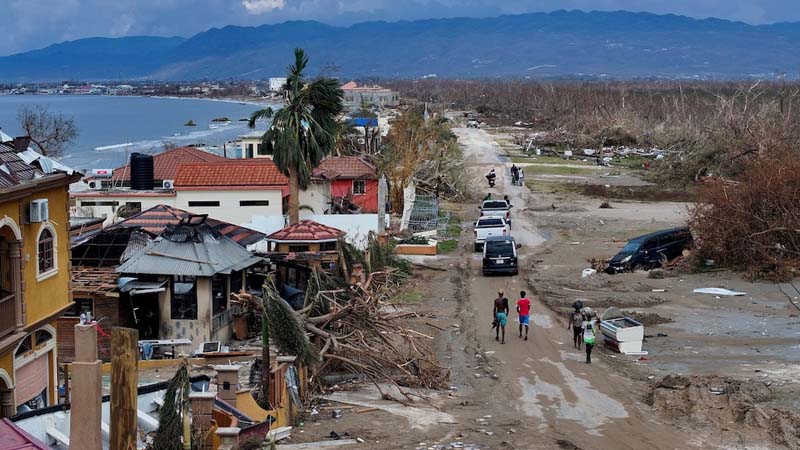
Mukta Desh Desk: The unusually warm Caribbean Sea has made a powerful Category 5 storm, Melissa, hit Jamaica. It is the strongest storm in the country’s history. The southwest region has been devastated by the cyclone, which hit on Monday (October 28). The country’s prime minister has called it a “national disaster”. Source: Reuters
Melissa’s maximum speed was more than 250 kilometers per hour, which is the second highest in the history of the Atlantic Ocean region, according to the weather agency AccuWeather.
Anne-Claire Fontan, a storm expert at the World Meteorological Organization (WMO), said, “This is the storm of the century for Jamaica. The country has never seen such a powerful impact before.”
Jamaica has never been directly hit by a Category 4 or 5 storm before. In 1988, Gilbert made landfall as a Category 3 storm. Melissa was the most powerful hurricane to hit Jamaica since then.
The storm hit the southwestern counties of Westmoreland and St. Elizabeth the hardest. St. Elizabeth’s only public hospital was severely damaged and power was cut off. Prime Minister Andrew Holness visited the scene and said it could take a decade to rebuild.
The disaster left about 77 percent of Jamaica without power. The popular tourist town of Montego Bay was in waist-deep water. According to the weather agency, Melissa caused about $22 billion in economic damage. In addition, at least 25 people died in neighboring Haiti and about 735,000 people were evacuated in Cuba, but there were no fatalities there.
Melissa is the fourth hurricane of this season to gain devastating strength in less than 24 hours. Scientists say that warmer sea surface temperatures are making hurricanes faster and more destructive. This trend of ‘rapid intensification’ or rapid strengthening is a direct effect of climate change.
Caribbean countries have renewed their call for rich and polluting countries to launch an effective “loss and damage fund” to help countries affected by climate disasters.
The fund, set up in 2023 to help with post-disaster recovery, has seen contributions from rich countries fall far short of expectations. Meanwhile, the United States withdrew from the fund’s board last March. However, several countries have already announced that they will send money, aid and rescue workers.