

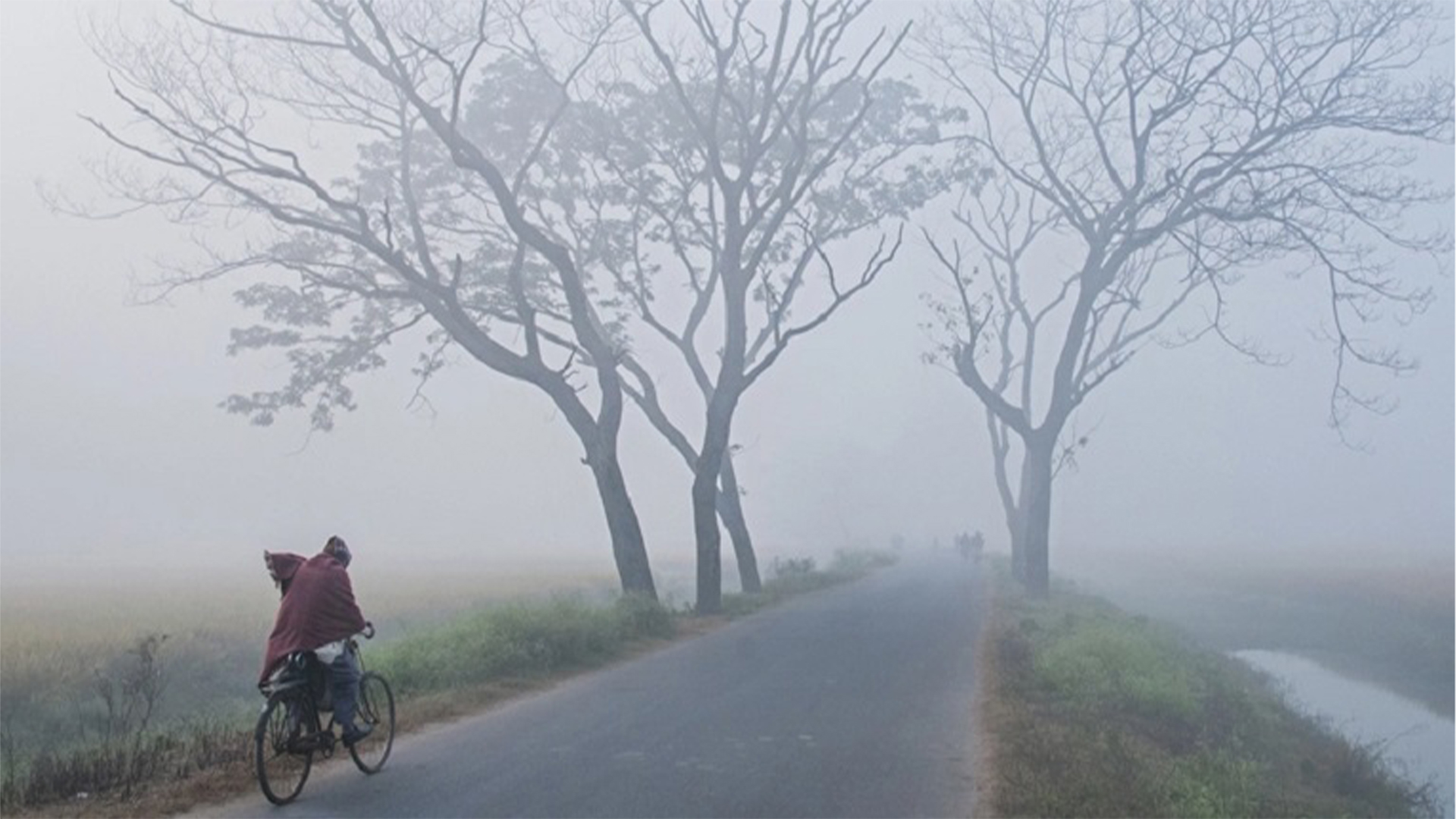
M.HASAN : Nature is now in the season of Hemanta, and the essence of winter is already in the air. Especially in rural Bengal, the dry landscape and the light mist descending at dawn and dusk are signaling the arrival of winter. The air now carries a cold, icy touch. Dewdrops sparkle like pearls on the tips of grass. Morning and evening, a blanket of fog wraps the world. The soft glow of early sunlight and the gentle winter chill send a shiver of delight through the soul. Winter is coming with its soothing coolness. Although Poṣh and Magh are the official winter months, Agrahayan is the threshold of winter. During this time, we rediscover the bare landscape. A strange enchantment surrounds everything. The sun pours down its magical light. The night sky glows with silvery stars. The moonlight turns bright and milky white—on full-moon nights, the moon appears like a silver platter washed in dew. The monsoon water in canals and wetlands has just begun to dry. The sky floats with scattered blue clouds. The whispering sound of the kans grass and the chirping of birds add liveliness to the countryside. A sharp longing whistles through the mind. Villages begin their fishing festivals. The weather of Hemanta now clearly announces that winter is approaching—and with it, the season of harvest, Nabanna, is on its way. Among the six seasons of Bangladesh, winter is the fifth. It stands distinctly apart from all other seasons. After autumn’s gentleness and clarity comes Hemanta—the queen of seasons—hand in hand with Nabanna, leading toward winter. Fields full of golden paddy and barns filled with new harvest bring joy, though the cold begins to settle into the bones. The warm sunlight of winter mornings becomes perfect for tasting fresh cakes and sweet dishes made from the new rice harvest. Children dipping long sticks into pots of sweet date palm sap and sipping it noisily—that picture still hasn’t changed. Nor has the warm, welcoming nature of the Bengali people.Date-palm sap, patali molasses, puffed rice, cakes and puddings, the warmth of straw-burning fires, guarding the wheat fields from birds, the snug comfort of quilts, the mixture of joy and hardship wrapped in foggy mornings and evenings—all mark the arrival of winter in our lives. Winter sunshine, foggy mornings, clay ovens in the courtyard, warming freezing palms beside the stove, the shivering bodies of the poor, the pale smoke from teacups, mustard fields spread in golden yellow—these scenes and their stories are deeply familiar to us. And then there are the village fairgrounds alive with jatra, circus, and opera shows throughout chilly winter nights.
Of course, winter brings colds and coughs. Some call winter a season of festivity, others see it as a time of death. Many describe it as a season of despair. In cold countries, “surviving a winter” is considered significant. But in recent years, nature no longer follows the calendar. It has become harder to tell winter from summer. Before winter settles in, spring seems ready to take over. Due to the greenhouse effect, nature is no longer behaving naturally. Summers are hotter, monsoons bring excessive rain or drought, and in winter temperatures vary drastically—sometimes too cold, sometimes unusually warm.
Winter influences nearly every aspect of Bengali life. Its appeal is eternal. Though sometimes the harsh cold restricts our lives for a moment, it refreshes the mind. Our days begin and end with the touch of dew. While those who are overly sensitive to cold might disagree, winter remains the favorite season for most. Even our clothing culture changes—people wear warm clothes to protect themselves from the cold. Everyone, young and old, bundles up. But for the poor in both rural and urban areas, winter comes as a curse. They lack warm clothing. Perhaps keeping this hardship in mind, poet Sukanta Bhattacharya wrote:
“O Sun, you know well
how few warm clothes we have.
All night we burn bits of straw,
covering our ears with scraps of cloth,
struggling to keep the cold away…”
Winter in Literature: Winter entered Bengali poetry in the medieval era, especially in the *Mangal Kavya*, where the heroine’s suffering throughout twelve months was described. Sixteenth-century poet Mukundaram Chakrabarti wrote:
“Harsh winter of Paush pleases the fortunate.
A shawl or quilt shields them from the cold;
But poor Phullara suffers greatly,
For in Magh she finds no greens to gather…”
Later, modern poets also praised winter. Rabindranath Tagore wrote:
“A sudden gust of winter wind came rushing.
Before the song could end
my thoughts scattered in confusion—
it swept them away with the dry leaves.”
In Jasimuddin’s “Rakhāl Chhele”, winter appears in its most intimate rural form:
“Waking up today I see dew-drenched grass;
Dreams of the night smile in the mellow morning sun…”
The poet of nature, Jibanananda Das, repeatedly invoked winter in his imagery—“dew-soaked Paush dawn”, “Nona flower”, “Ataban”, “mist laying its hand on her hair”, “falling dew”, “Paush’s last nights and the lone owl”. In his poem “Shitrat,” he wrote:
“On these winter nights, death comes into my heart;
Perhaps dew is falling outside, or leaves.”
Shamsur Rahman’s poems “Rupali Snan” and “Tar Shajyar Pashe” also contain winter motifs. Poet Al Mahmud wrote:
“Sometimes in the morning sun, dusted with dewdrops,
a man walks on, wrapped in fog.”
Winter Cakes (Pitha-Puli): Bengali pithas are not just delicious—they carry our cultural heritage. Their delicate designs reflect artistry, and their names are delightful: *patisapta, dudh-koli, vaja-koli, narikeli, bhapa, chitoi, nakshi-pitha,* and more. Pithas soaked in date-palm syrup awaken anyone’s appetite. Steam-cooked *bhapa pitha* becomes an irresistible winter treat. Bhapa pitha is made from atap rice flour, jaggery, and coconut. Mixing milk with date sap creates *rosher pitha*. Other varieties such as *chitoi, dudh-chitoi, bora pitha, patisapta, dudh-puli, kshir-puli, chandra-puli* are also popular.
Once an essential part of rural life, pithas have now become city delicacies too. Street stalls and high-end restaurants offer special pitha menus during winter. Alongside pithas, *moa, murki, laddu,* and *barfi* were once inevitable. But nothing matches the distinct flavor of winter date-palm sap. Drinking fresh sap, boiled thick syrup, or eating puffed rice with *nolen gur* in winter mornings is a timeless rural tradition.
Winter foods include thick fish stews, *mash-kalai dal*, and crispy rice—rural favorites. The abundance of vegetables in winter naturally adds variety to meals.
Abundance of Winter Vegetables: In winter, rural fields fill with vegetable crops. Markets overflow with cauliflower, cabbage, radish, carrots, beans, okra, eggplant, tomatoes, pumpkins, bitter gourd, ridge gourd, snake gourd, potatoes, and long beans. Fresh leafy greens like spinach, red amaranth, and radish greens are plentiful. Not just vegetables—fruits such as oranges, apples, pomegranates, and grapes fill the market. Many fruits are also imported from India, Nepal, and Pakistan.
Blossoming of Winter Flowers: With winter’s scent now in nature, flowers fill the air with fragrance. Roses and marigolds bloom in abundance. Nurseries become vibrant with seasonal flowers. Shops display a variety of winter blossoms. Native winter flowers include jasmine, dahlia, periwinkle, madhabilata, rangon, alokananda, dopati. Foreign flowers such as strawflowers, asters, calendula, sweet peas, lupins, carnations, dianthus, cosmos, morning glory, phlox, gaillardia, and larkspur color the landscape.
As Tagore said:
“Flowers seem to speak;
Leaves stand around them
in a clustered silence.”
Suffering During Cold Waves :Cold waves during winter bring hardship. Sometimes, the sun remains hidden for days. Heavy fog disrupts road transport, often causing accidents. In the intense cold of Magh, temperatures drop drastically. Street lights become invisible through dense fog. Cold waves claim lives every year, especially in northern districts. Laborers and the poor suffer the worst.
Arrival of Migratory Birds : In the northern hemisphere, bitter cold and frozen landscapes force birds to leave their habitats. Seeking food and safety, thousands of birds travel thousands of miles and arrive in Bangladesh’s rivers, wetlands, and floodplains. With the start of Hemanta and early winter, migratory birds fill the countryside with their calls. Birds including pochards, teals, pintails, gulls, sandpipers, and nearly 150 species arrive here. Wetlands in the Sundarbans, Sunamganj haor, Hakaluki haor, Jahangirnagar University, Dhaka Zoo lakes, and areas of Gopalganj, Khulna, Jessore, Chattogram University, and the hill districts become full of migratory birds. But human activities are gradually reducing their numbers. Poachers trap them with nets, poison bait, or pellets.
The Best Time for Travel : With winter’s arrival, tourist destinations across Bangladesh become lively. Cox’s Bazar, the world’s longest sea beach, becomes even more crowded. Hotels overflow. Inani Beach, St. Martin’s Island, and Kuakata also buzz with tourists. Kuakata’s sunrise and sunset views, its Buddhist temples, dry fish yards, coconut gardens, and forests delight visitors. The hill districts—Rangamati, Bandarban, and Khagrachhari—are also vibrant. Kaptai, the hanging bridge, Shuvolong Falls, Meghla, Nilgiri, Golden Temple, Nilachal, and Alutila Caves attract countless travelers. Tourism companies offer special winter packages.
Winter Diseases: Though enjoyable, winter brings health issues. Weather changes lead to colds, coughs, throat irritation, nasal congestion, runny nose, sneezing, viral fever, body aches, headaches, fatigue, and loss of appetite. Sinus problems, ear infections, tonsillitis, and otitis increase. Skin becomes dry, cracked, and eczema, itching, and scabies are common.