

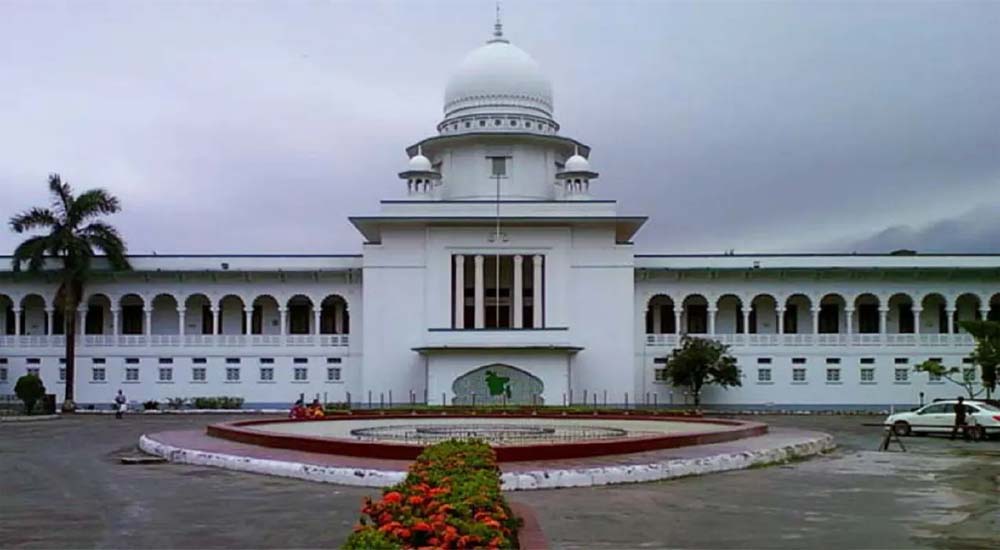
Muktadesh Desk: An appeal has been filed against the High Court’s verdict declaring several provisions of the 15th Amendment to the Constitution, including the abolition of the caretaker government system, as illegal. On Monday (November 3), lawyer Dr. Sharif Bhuiyan filed this appeal on behalf of Dr. Badiul Alam Majumdar, editor of the Citizens for Good Governance (Sujon). The appeal seeks the cancellation of the entire 15th Amendment.
On December 17 last year, the High Court declared several provisions of the 15th Amendment to the Constitution, including the abolition of the caretaker government system, as illegal. At the same time, the court restored the provision of referendum in the Constitution. However, it did not cancel the entire 15th Amendment.
The High Court bench of Justice Farah Mahbub and Justice Debashish Roy Chowdhury announced this verdict. The High Court declared Articles 20 and 21 of the 15th Amendment Act, which abolished the caretaker government system, to be inconsistent with the Constitution and invalid.
In its judgment, the court observed, “Democracy is part of the basic structure of our constitution. This democracy develops through free, fair, impartial and influence-free elections. But in the last three parliamentary elections under the party government, there was no reflection of the will of the people. Confidence in fair elections under the party government did not arise among the people. As a result, the July uprising took place.”
In its judgment, the High Court said, “The caretaker government system was included in the constitution as per the will of the people and it has become part of the basic structure of the constitution.”
The High Court said that the Fifteenth Amendment Act is not being repealed in its entirety. The remaining provisions will be amended, revised and changed by the next National Parliament in accordance with the law, taking into account the opinions of the people. These include the issue of recognition of the Father of the Nation and the issues of the March 26 speech.
Regarding the referendum, the High Court said in its judgment that the provision of referendum, which was part of Article 142 of the constitution, has been abolished. Section 47 of the Fifteenth Amendment Act, which abolished this provision, was declared null and void as it was inconsistent with the basic structure of the Constitution. As a result, Article 142 of the Twelfth Amendment was reinstated.
The High Court judgment also annulled Articles 7A, 7B and 44(2). Article 7A made the Constitution null and void, while Article 7B made it unlawful to amend the fundamental provisions of the Constitution.
Meanwhile, Article 44 deals with the enforcement of fundamental rights. Clause 2 of this Article states that without prejudice to the powers of the High Court Division under Article 102 of this Constitution, Parliament may by law empower any other court to exercise those or any of its powers within the local limits of its jurisdiction. This Article has been declared null and void in the judgment.